

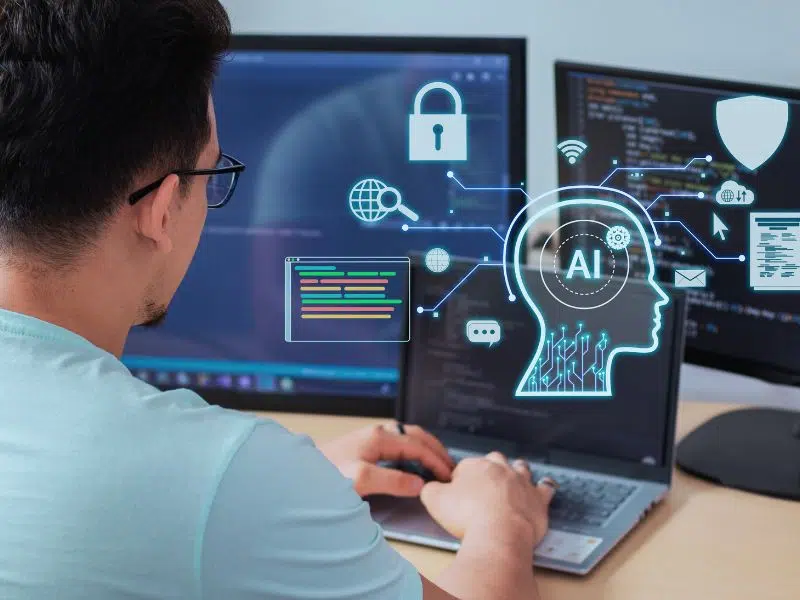
Workplace virtualization is gaining relevance as a strategy to strengthen resilience against ransomware, identity-based attacks, and automated threats. Centralizing desktops and applications helps reduce dependency on physical endpoints and improves recovery capabilities following cybersecurity incidents.
The rise of artificial intelligence is accelerating the sophistication and automation of ransomware, phishing, and credential theft campaigns. Threats are evolving into attacks that are faster, more personalized, and harder to detect, especially in hybrid and distributed work environments, where traditional models based on physical endpoints are beginning to show limitations against automated and identity-based attacks.
This evolution is already reflected in leading industry reports. According to the CyberArk Security Landscape Report 2026, CyberArk — a company belonging to Palo Alto Networks — reports that 97% of Spanish organizations experienced at least one identity-related breach in the past 12 months, while 88% acknowledged suffering three or more incidents of this kind.
The report also highlights the growth of credential-based attacks, MFA bypasses, and compromised privileged access, in a context marked by the increase in machine identities and AI agents with access to corporate systems and data.
Why Traditional Endpoints Are Losing Effectiveness Against Automated Threats
The rise of these threats is forcing many organizations to rethink their workplace protection strategies. In many cases, a security incident can block access, disrupt operations, and impact organizational productivity for hours or even days.
The evolution of ransomware and identity-based attacks is shifting the focus away from protecting the device itself toward models centered on resilience, business continuity, and recovery capabilities.
Benefits of Workplace Virtualization in Security Incident Scenarios
In this scenario, more organizations are adopting workplace models that are less dependent on physical endpoints and better prepared to recover from incidents. Workplace virtualization enables the centralization of desktops, applications, and data to reduce the attack surface, simplify IT management, and improve recovery capabilities following a cyberattack.
This approach makes it possible to separate data and applications from the physical device, strengthen infrastructure control, and accelerate recovery capabilities after a security incident. In addition, the use of non-persistent virtual desktops allows organizations to quickly restore clean and standardized work environments after an incident.
UDS Enterprise: Driving Resilience in the Digital Workplace
Digital workplace solutions such as UDS Enterprise, the platform developed by Virtual Cable, provide secure and centralized access to virtual desktops and applications from any location and device.
“The challenge is no longer just preventing attacks, but ensuring that operations can be restored quickly when an incident occurs,” says Javier González, Technical Director at Virtual Cable. “In increasingly distributed environments exposed to automated threats, UDS Enterprise helps organizations strengthen operational continuity.”
Beyond prevention, organizations are increasingly prioritizing strategies focused on strengthening resilience against cyberattacks and automated threats.
Frequently Asked Questions About Ransomware, AI, and Workplace Virtualization
Why is AI-driven ransomware becoming a growing concern for organizations?
Artificial intelligence enables the automation of phishing campaigns, credential theft, and identity-based attacks, making threats faster, more personalized, and harder to detect.
What are identity-based attacks?
These are cyberattacks that use stolen credentials, compromised privileged access, or MFA bypass techniques to access corporate systems without relying on traditional malware exploitation.
Why do traditional endpoints represent a risk against automated threats?
Physical endpoints expand the attack surface, especially in hybrid and distributed environments. If a device is compromised, it can impact access, productivity, and business continuity.
How does workplace virtualization help protect against ransomware?
Workplace virtualization centralizes desktops, applications, and data, reducing dependency on physical endpoints and simplifying recovery after security incidents.
What cybersecurity advantages does a VDI environment provide?
A VDI environment centralizes IT management, reduces the attack surface, strengthens access control, and improves resilience against cybersecurity incidents.
What advantages do non-persistent virtual desktops offer against ransomware?
Non-persistent virtual desktops allow organizations to restore clean and standardized work environments after an incident, reducing the impact of infections and simplifying operational recovery.
What is the relationship between Zero Trust and workplace virtualization?
Virtualization supports Zero Trust strategies by enabling greater control over access, identities, devices, and user sessions in distributed environments.
What is UDS Enterprise?
UDS Enterprise is the workplace virtualization and digital workplace solution developed by Virtual Cable to provide secure and centralized access to virtual desktops and applications.







0 Comments